H ShowcaseCommunityPrivacy Layer for Visual Agents
Privacy Layer for Visual Agents
Redacts every screenshot on-device before it reaches a computer-use model.
 by @dael-amz
Hackathon SF
What it does
Computer-use agents stream screenshots of your real desktop to a cloud model, passwords included. PLVA sits between HoloDesktop and the model and redacts every frame on-device, so the agent still fills the form, but nobody upstream ever sees your secrets.
How it works
- Redact on-device. Every frame is scrubbed by CoreML in about 120 ms, fail-closed.
- Hide secrets behind tokens. PII lives in a memory-only vault; tokens resolve to real values only inside executed actions.
- Decide locally when a secret must be seen. A Qwen3-4B in a zero-egress NemoClaw sandbox approves gated credential use against your rules.
- Proven, not promised. Verified with real Holo 3 runs and 338 tests.
Built with
In the team's words
PLVA — the Privacy Layer for Computer-Use Agents. Computer-use agents stream screenshots of your real desktop to a cloud model — passwords, emails, and API keys included. PLVA is a fail-closed proxy between HoloDesktop's Holo3 runtime and its provider that redacts every frame on-device (CoreML, ~120ms), hides PII behind placeholder tokens in a memory-only vault, resolves tokens back to real values only inside executed actions, and re-scrubs history so nothing leaks back upstream. For decisions that require actually seeing a secret, a local Qwen3-4B runs inside an NVIDIA NemoClaw sandbox with an empirically deny-tested zero-egress policy: it approves gated credential use against user-written rules, halts a misbehaving agent, and computes over hidden values (sort/select) while grammar-constrained decoding forces it to answer in tokens only. Verified with real Holo3 runs and 338 tests: the agent still fills the form, still uses your key — but nobody upstream ever gets to look.
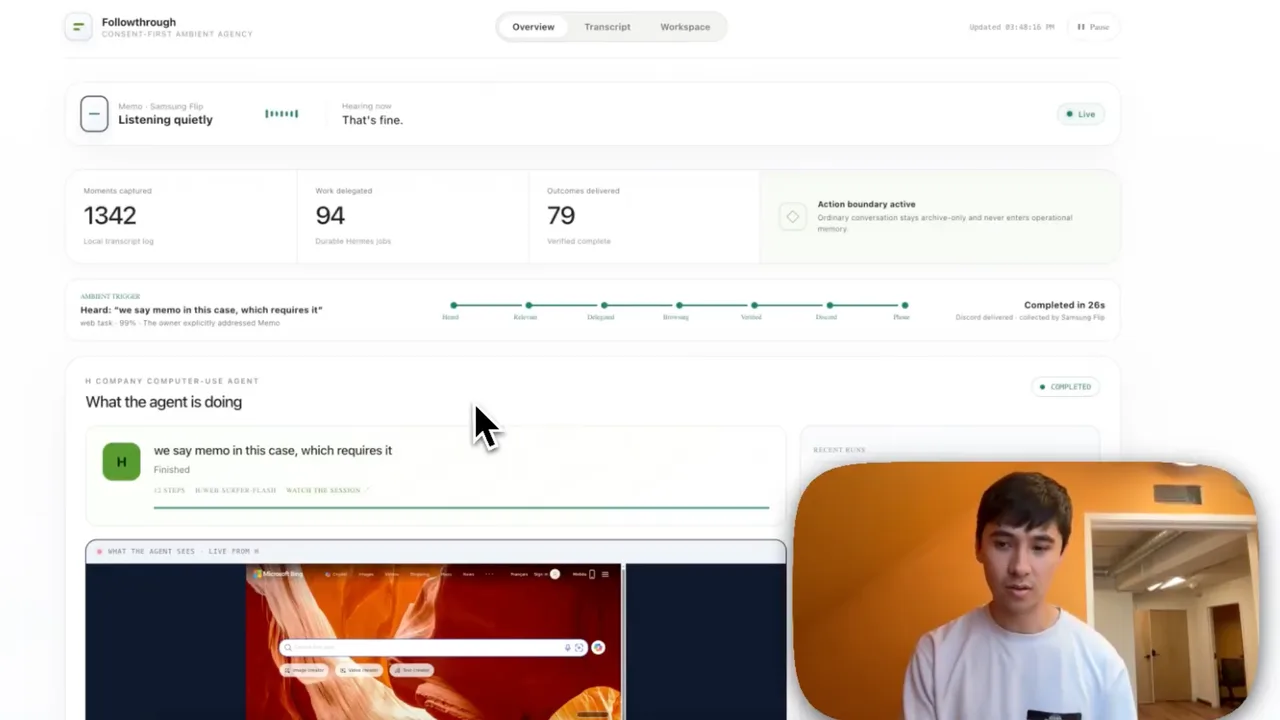
FollowThrough
A consent-first BizDev agent that turns conversations into researched actions.
 by @yhinai
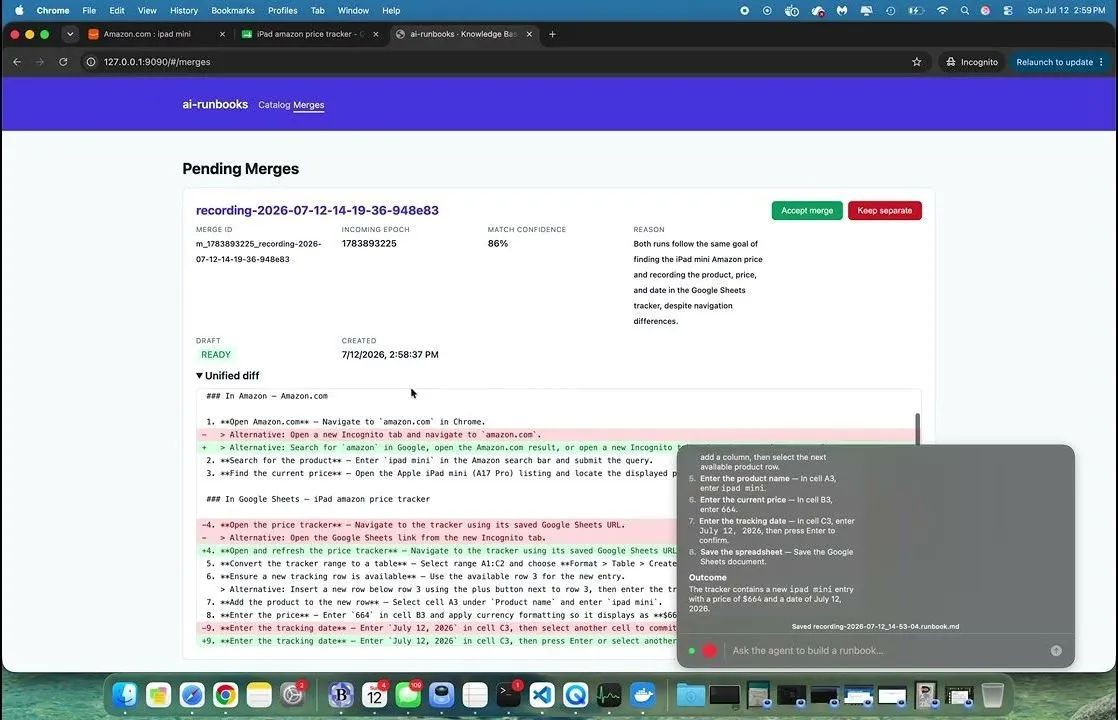
AI Runbooks
Turns screen recordings into runbooks an agent can replay and check step by step.
 by @omkarpat